Best Flat Roof Repair Material
The best flat roof repair material is the one that matches the membrane already on your roof, and BST Roofers picks it after looking at what you have. Reinforced patches suit TPO, EPDM and PVC, while modified bitumen takes a compatible cold-applied or torch-down patch. A patch that does not bond to the old surface will fail at its edge.
Repair materials compared
Most common repair · matching patch |
Over the top | ||||
|---|---|---|---|---|---|
| Material | TPOSingle-ply | EPDMRubber | PVCSingle-ply | Modified bitumenTorch-down | CoatingLiquid-applied |
| Repair method | Heat-welded patch | Adhered or self-adhesive patch | Heat-welded patch | Cold-applied or torch-down patch | Liquid-applied layer |
| Repair lifespan | Long | Long | Long | Medium to long | Medium |
| UV resistance | High | Moderate | High | Moderate | High, reflective |
| Best for | Single-ply roofs | Rubber roofs | Chemical-heavy roofs | Row house roofs | Sound, aging roofs |
Swipe to see all five materials
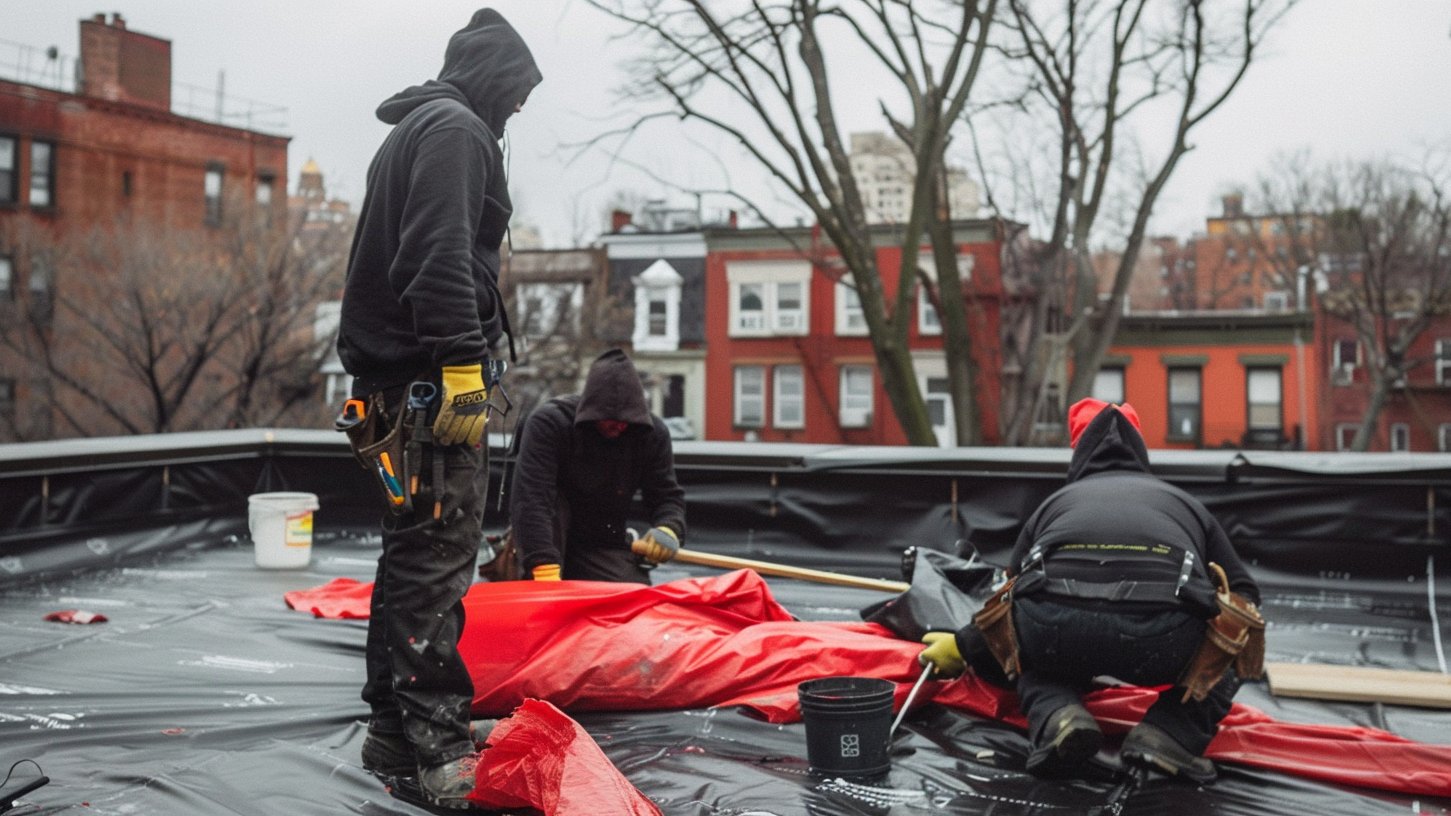
The repair we choose again and again is the patch that matches the existing membrane.
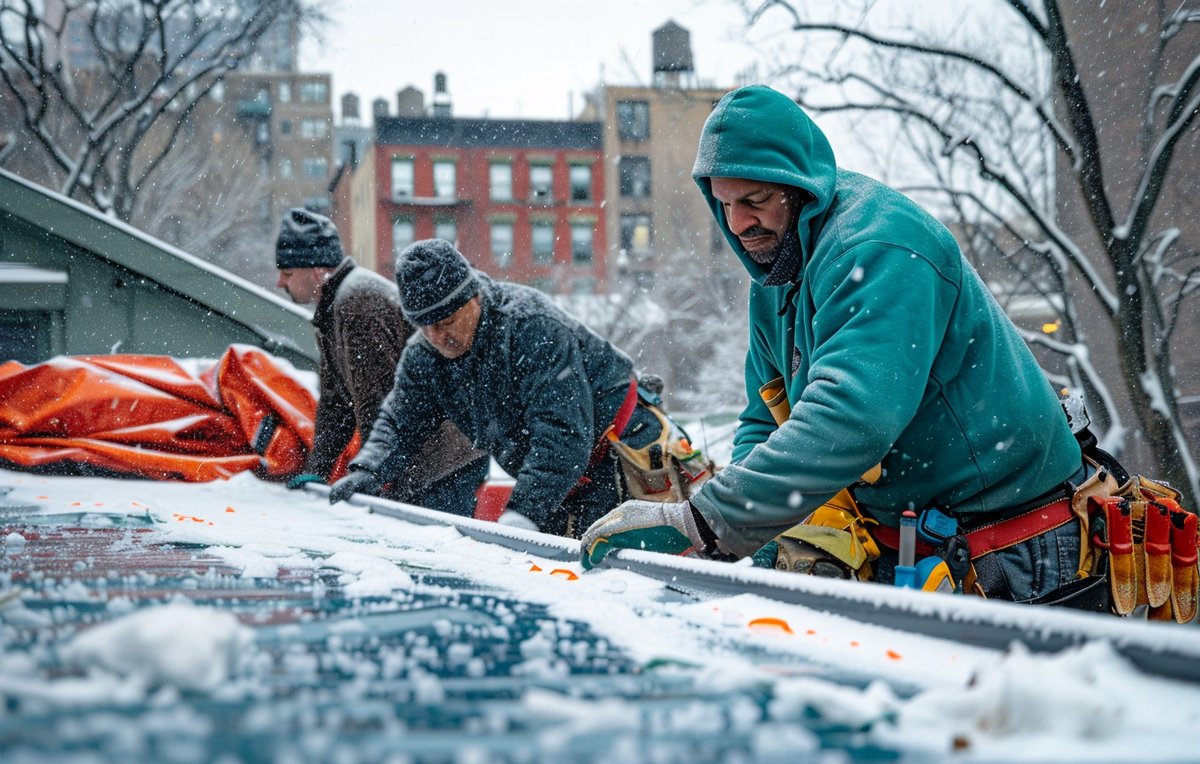
Match the repair to the roof you have
Compatibility decides everything.
Single-ply sheet, mineral-surfaced torch-down and old tar and gravel each bond to different materials, so we identify yours first.
Mixing systems is where repairs go wrong. A patch that looks fine on day one can lift at the edge after a few freeze and thaw cycles.
Patches, seams and flashing
Each of the three failure points needs its own material.
Punctures
Heat-welded or adhered patches.
Seams
Seam repair matched to a single-ply sheet.
Flashing
Proper repair at parapets and penetrations.
Roofing cement alone is only a stopgap.While a leak is active, start with what to do in a roof leak emergency.
When a coating beats a patch
A reflective liquid-applied coating can extend the life of a sound but aging roof and cut the heat it absorbs. It works only over a dry, sound roof.
It does not work over soaked insulation or standing water, because trapped moisture stays trapped. We check for both before we recommend it.
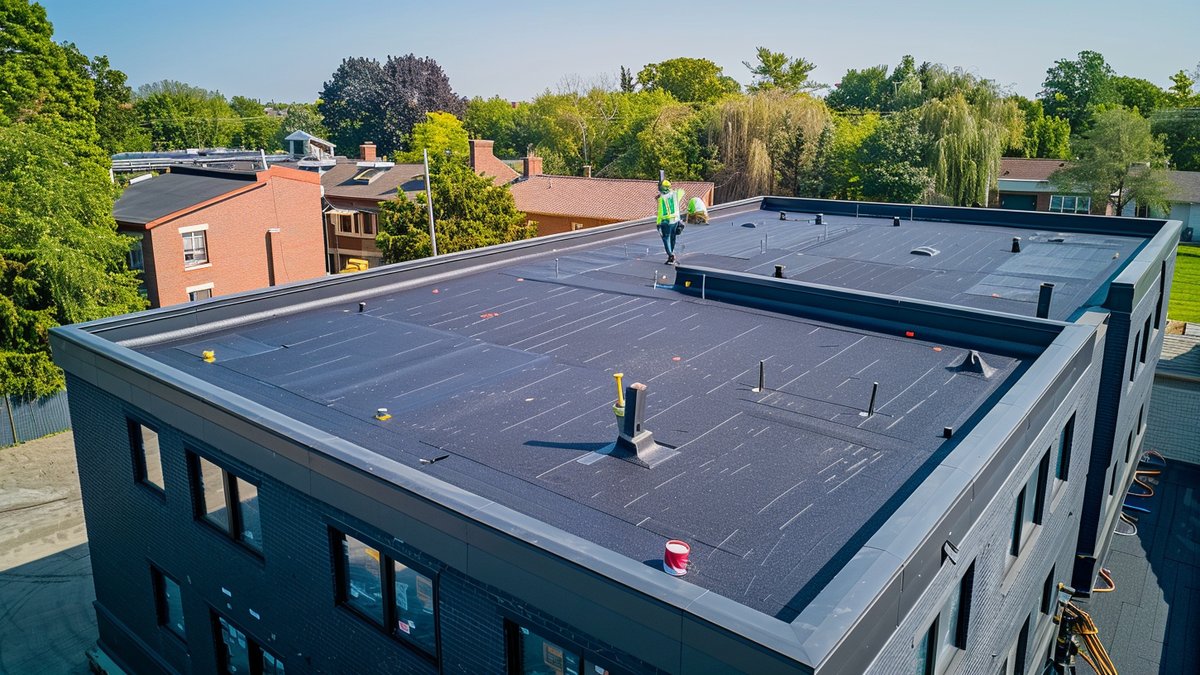
Coating only over a dry, sound roof.
- Sound but aging roof
- Soaked insulation
- Standing water
Ponding water and repair vs. replacement
No material fixes a roof that pools water.
Drainage and deck condition come first, and they are part of our low slope roof repair inspection.
Repeated patches on the same area are the sign to price a re-roof. Is that where your roof stands? Low slope roof replacement is the next step.
Flat roof repair material FAQ
Get your free estimate
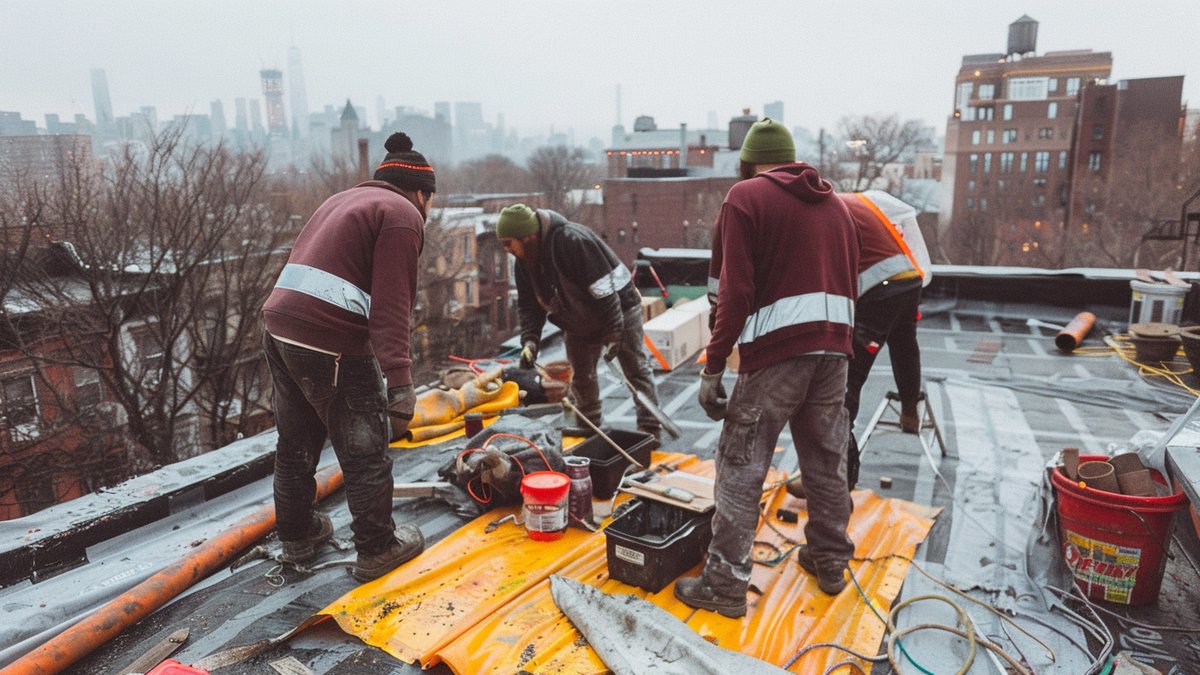
Not sure which material your Brooklyn flat roof needs? Ask us, and we will match the repair to your roof through our low slope roof repair service.